
The Mindset That Fixes the Future: Why Education Needs a "Repair Mindset"
By Veerappan Swaminathan
Founder & CEO, SL2 Group | Co-Founder, edm8ker | 2023 UN Global Compact SDG Pioneer
Back in 2011, when my team and I launched Singapore’s first community makerspace under Sustainable Living Lab (SL2), we were surrounded by tools, kampong spirit, and a paradox we couldn't ignore. Right outside our doors, a buy-and-throw-away culture was taking over. Perfectly good appliances were being dumped over minor, fixable glitches simply because mending things had become a lost art.
That realization birthed Repair Kopitiam in 2014 to drive community repair across Singapore, and led us to officially spin off edm8ker in 2016 to bring hands-on diagnostic engineering straight into school classrooms.
As I often remind our community: "You don’t truly own what you can’t repair. Do you understand how it works? Do you know how to fix it? If not, you’re basically just renting it. True ownership means taking charge of problems rather than making them someone else’s responsibility."
Over a decade of community repair and expanding classroom initiatives across Southeast Asia, North America, and beyond, our coaches and educators have helped thousands of students step up to real-world diagnostic challenges. Standing at the repair benches weekend after weekend reinforced a key truth: repair is the highest form of recycling. While traditional recycling relies on energy-intensive processes to melt or shred scrap materials down, mending preserves 100% of an object's embedded energy, craftsmanship, and raw utility.
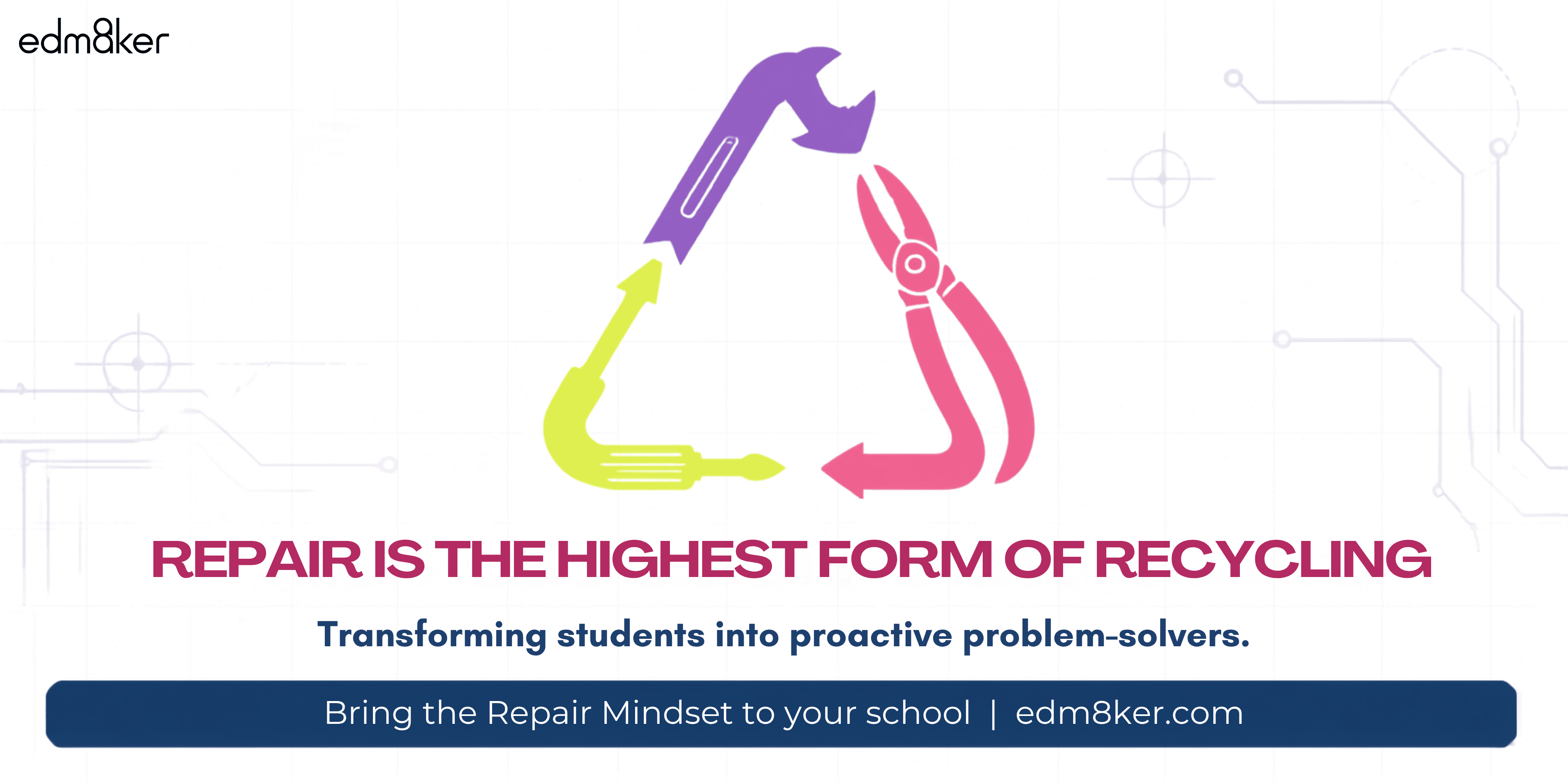
Beyond the blue bin: Shifting education from passive consumption to proactive problem-solving.
Beyond e-waste reduction, those repair benches revealed something far deeper: people weren't just fixing objects—they were building character. When you sit at a repair bench, you cannot force an instant result. You are forced to practice perseverance, discipline, and patience. You learn to trace an invisible fault, test hypotheses, and embrace the friction of not knowing the answer right away.
This disposition is what I call a Repair Mindset. And as an engineer and educator, I am convinced it is one of the most vital capacities we can cultivate in maker education today.
Bridging Theory and Practice: Why STEM Activity Needs UbD
To bring a Repair Mindset into schools rigorously, hands-on activity cannot be arbitrary tinkering. At edm8ker, our Repair@School curriculum is built on the principles of Understanding by Design (UbD).
In community repair, our golden rule is: "We coach people to do their own repairs–we repair WITH them, not FOR them." We bring this exact same ethos of active empowerment into the classroom. We divide our pedagogical framework into two complementary halves:
- Enduring Understandings (Theory): The conceptual backbone and transferable mental models.
The D.I.A.G.N.O.S.E. Framework (Practice): The structured, hands-on diagnostic application.
6 Enduring Understandings That Build Resilient Problem-Solvers
Every repair task is designed to build towards six core, transferable ideas:
How the D.I.A.G.N.O.S.E. Framework Turns Theory Into Action
While Enduring Understandings supply the cognitive theory, the D.I.A.G.N.O.S.E. Framework provides hands-on execution. It moves students away from single-answer kit manuals into an adaptable 8-step engineering process:
- Phase 1: Mastery of Function: Students Deconstruct the object, Identify component functions, and Assemble & Attest to prove baseline understanding.
Phase 2: Troubleshooting & Innovation: Students Generate initial tests, Name non-routine causes, Outline targeted innovations, Solve the fault hands-on, and Execute & Evaluate functional recovery.
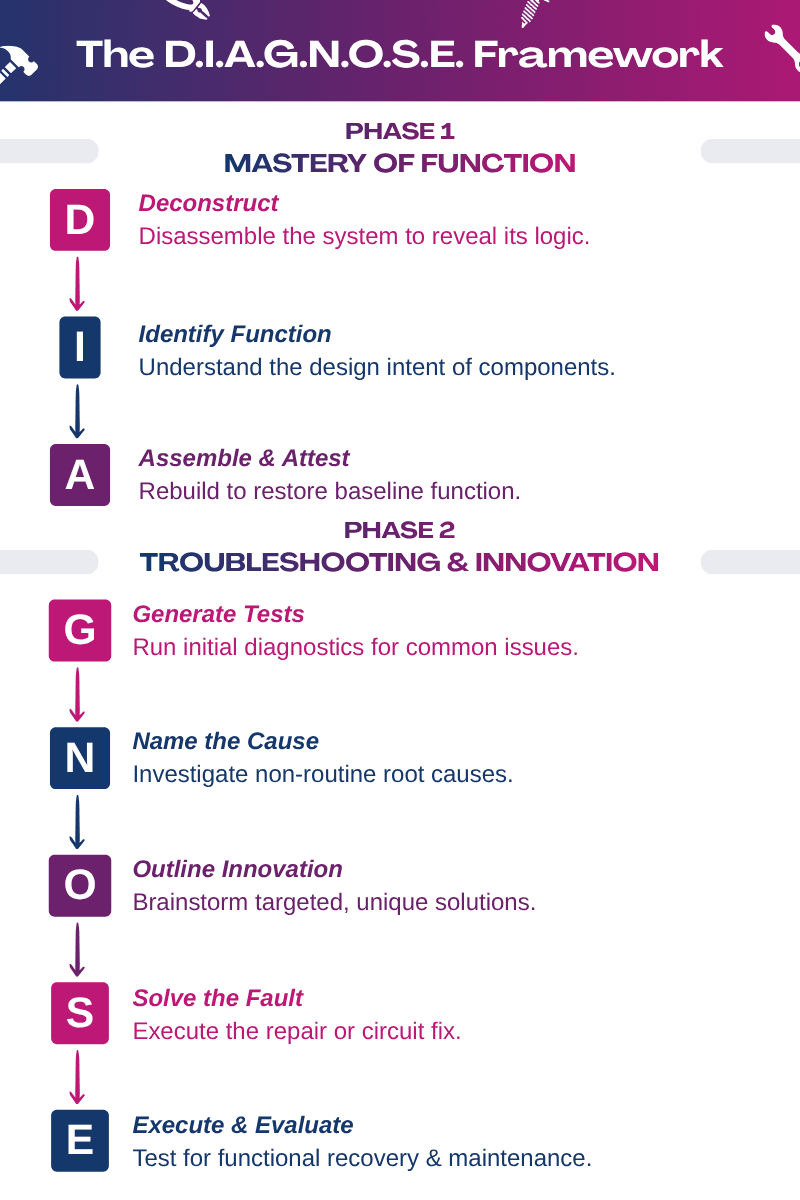
The D.I.A.G.N.O.S.E. Framework: An 8-step engineering roadmap that moves students from baseline function mastery to structured troubleshooting and innovation.
Crucially, this process dismantles the traditional "shifu" (master) mentality—the idea that an expert must know the answer immediately. Engineering agency requires humility: recognizing that no one knows everything about a complex system, and that failure is simply diagnostic data guiding the next step.
The Future Has No Instruction Manual
This ethos is at the core of everything we do at edm8ker.
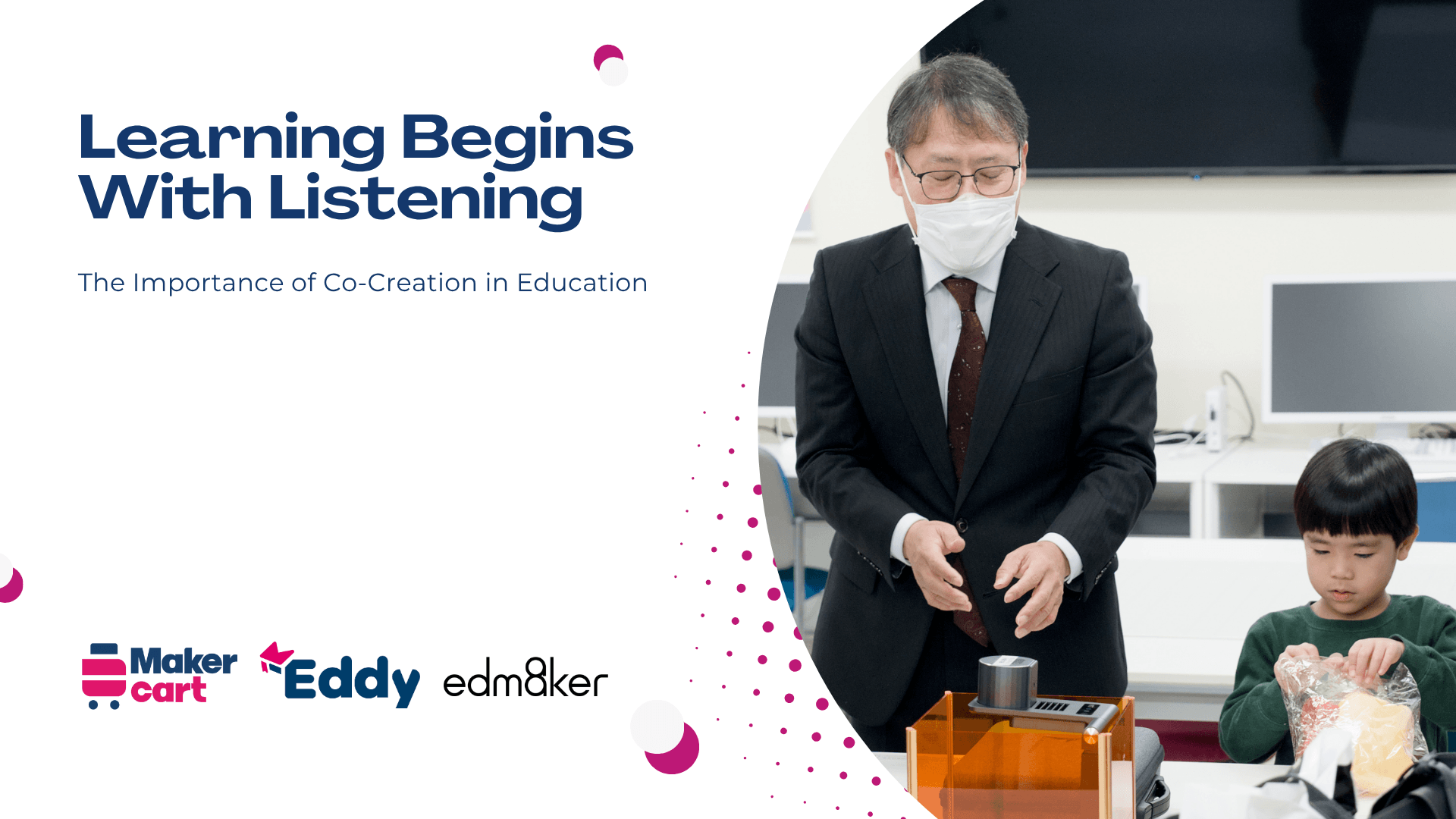
Working across 60+ countries, our goal when designing classroom resources like our Makercarts or collaborating with institutions like the Hyogo University of Teacher Education (HUTE) in Japan isn't just to supply hardware. It is to equip educators with the pedagogical confidence to guide students through the messy, rewarding process of debugging and iteration.
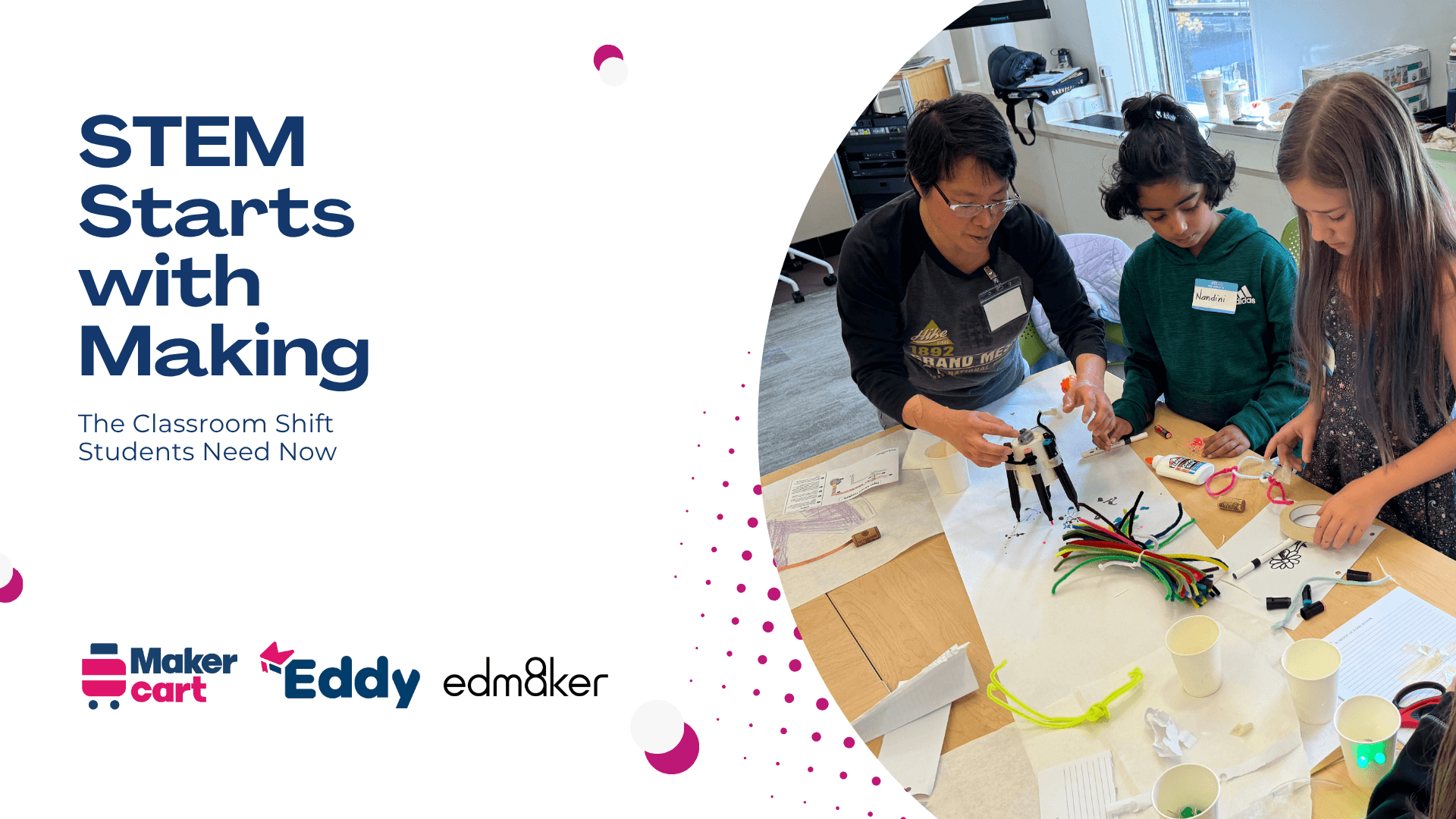
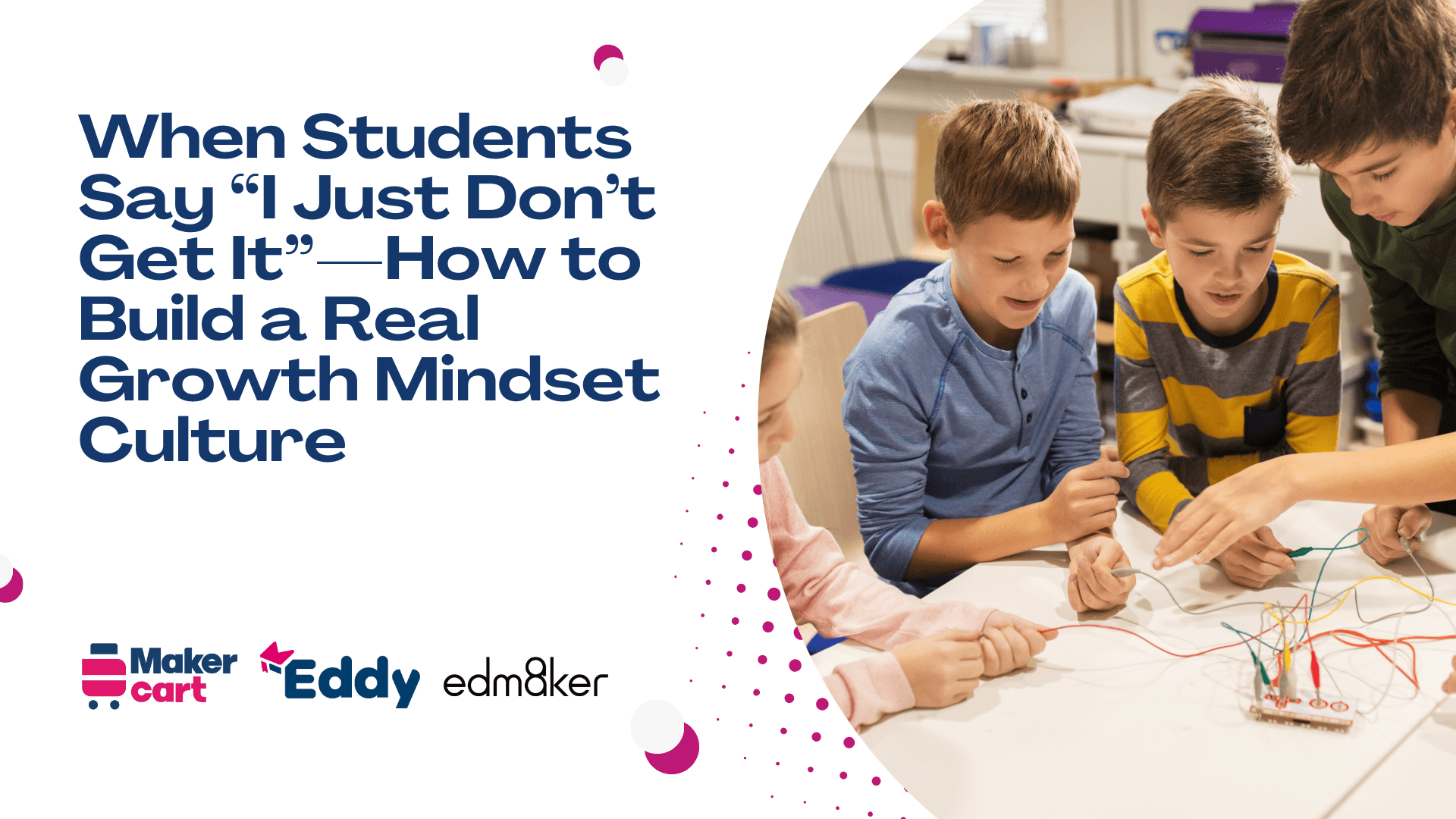
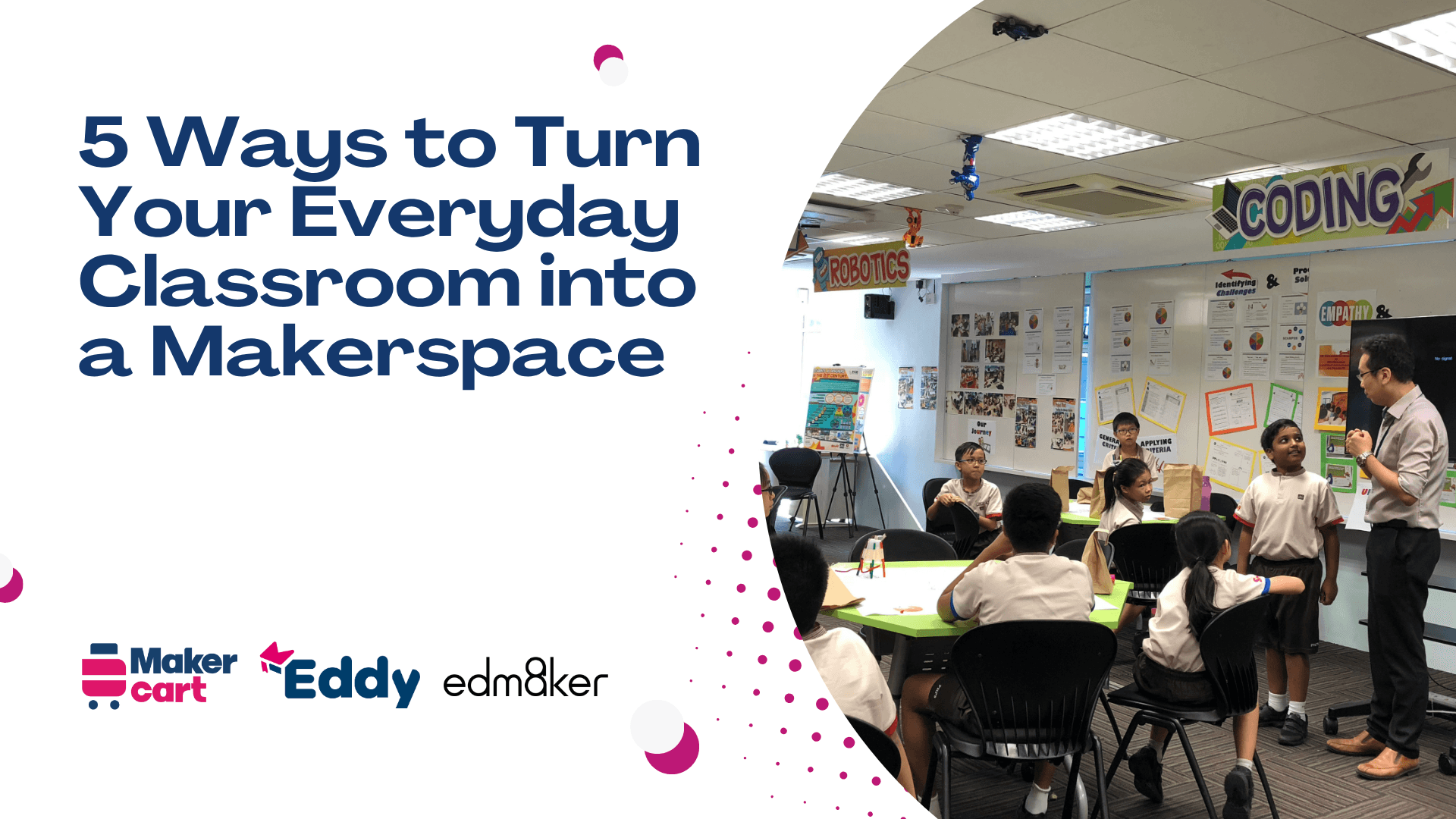
Through our Repair@School initiatives and community repair booths—at public events like Gardens by the Bay’s 'Be Crafty' series and The Sustainable Youth Festival (TSYF)—we bring hands-on restoration to learners of all ages. Whether exploring concepts through virtual repair simulations or experimenting with observational and interactive training kits, primary-aged children demonstrate remarkable engagement when troubleshooting internal systems. Meanwhile, secondary students at Commonwealth Secondary School and Singapore Sports School tackle full appliance deconstruction in class.
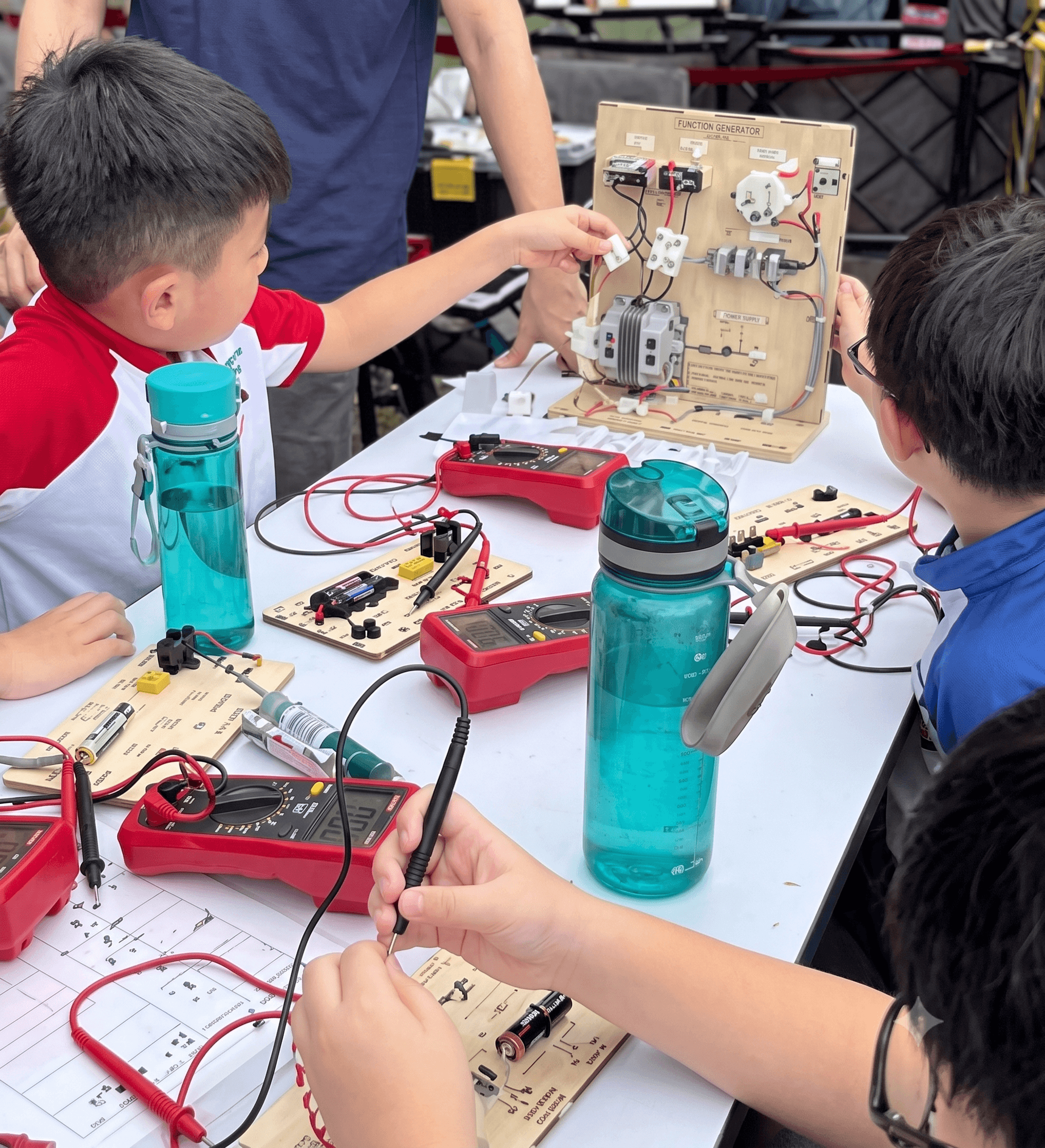
Primary-aged kids at a booth table interacting with training boards, wiring, and multimeters.
It is equally important to align expectations with educators and clients: our goal is not to turn students into master technicians overnight. Developing full repair competency takes years of practice and troubleshooting, just like any skilled craft. Instead, every student walks away with a Repair Mindset—the confidence, diagnostic resilience, and curiosity to face physical breakdown without fear. If they pick up specific technical repair skills along the way, that is a welcome bonus.
Ready to Build a "Repair Mindset" Culture in Your School?
Educational transformation doesn't start with gadgets; it starts with empowered teachers and intentional learning spaces. At edm8ker, we help schools move away from "black box" learning toward hands-on, resilient problem-solving.
- Test the Waters: Host a Repair@School Showcase or Introductory Programme featuring interactive training kits and virtual repair simulation games for your students.
- Empower Your Educators: Explore our Professional Development & Train-the-Trainer programs to transform your teaching team into confident Maker Champions.
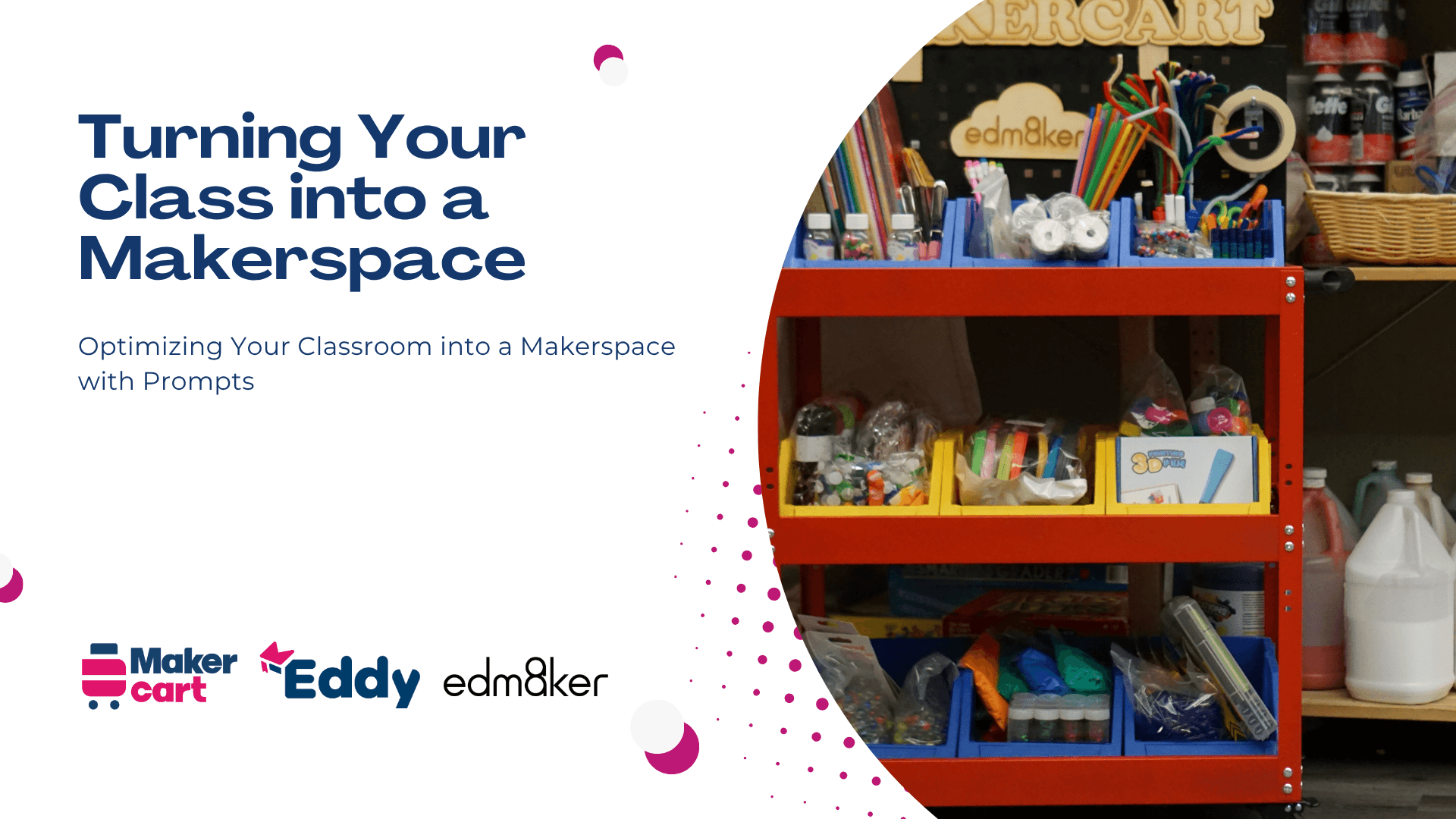
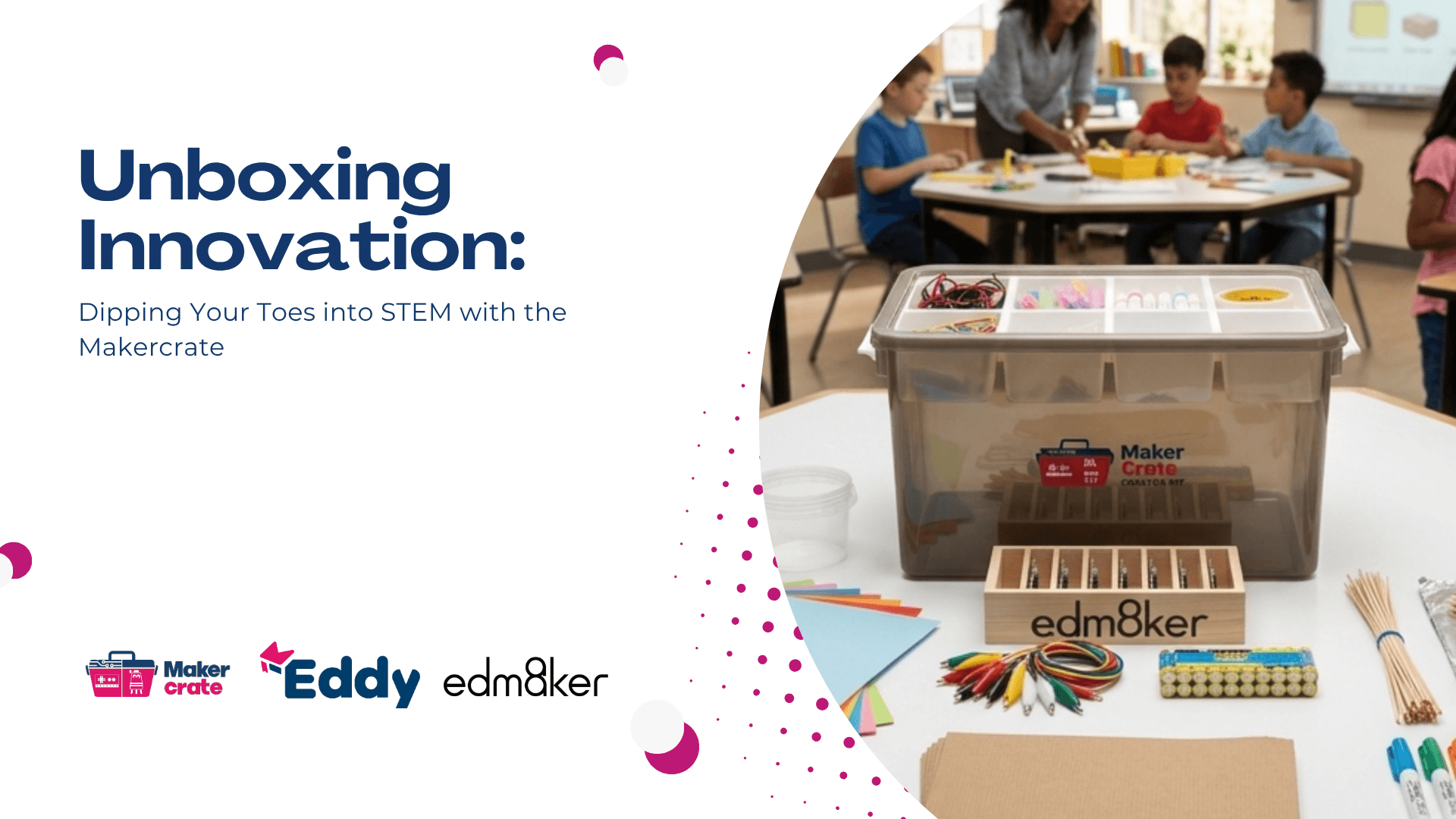
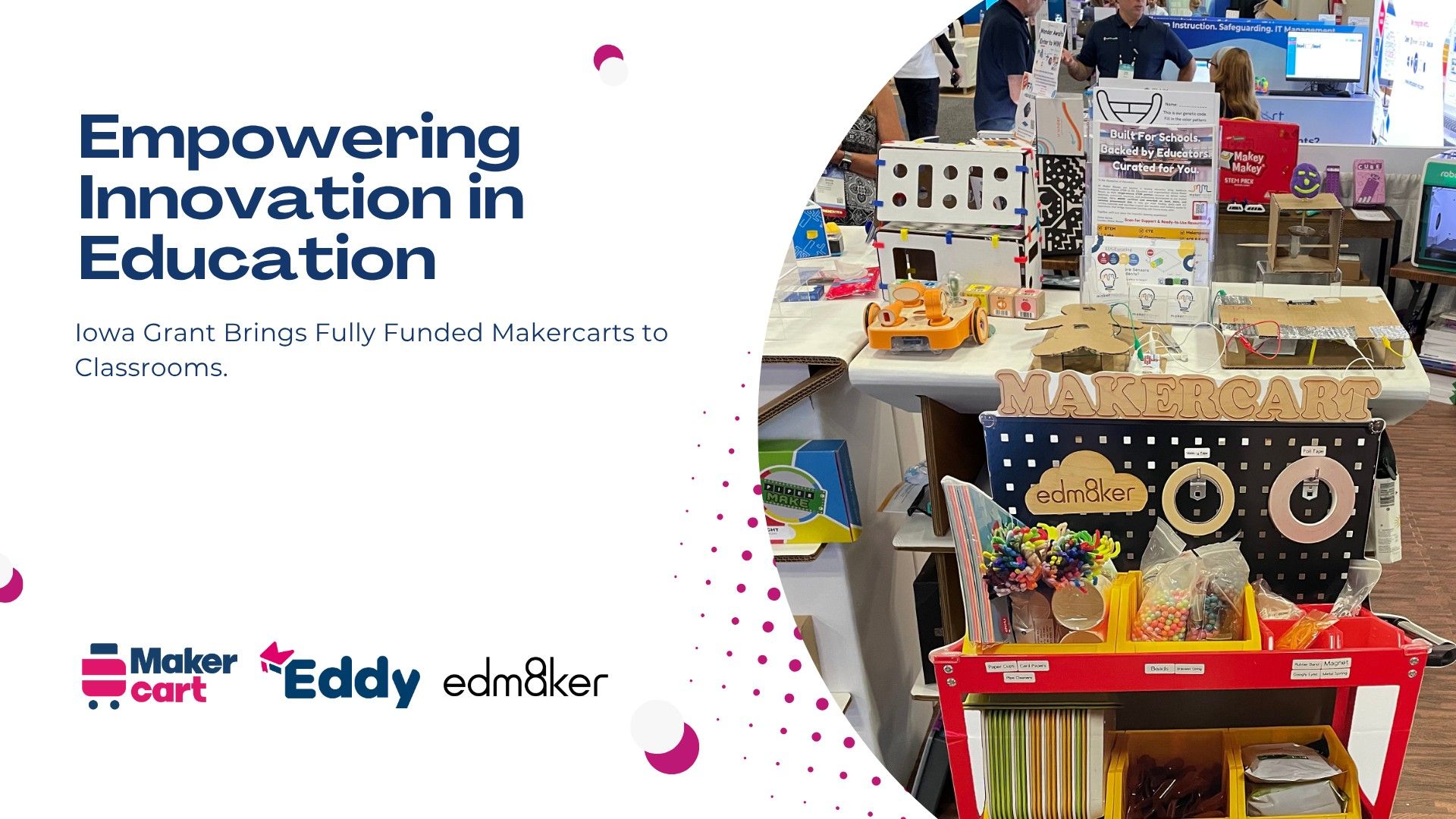
- Equip Your Classrooms: Discover our Makercart & Makercrate mobile systems—bringing 120+ hands-on STEAM activities directly to standard classrooms.
- Deploy Full Modules: Bring structured D.I.A.G.N.O.S.E. workshops and full appliance repair modules to your school.
📩 Schedule a Discovery Call with the edm8ker Team or explore our global case studies at edm8ker.com.